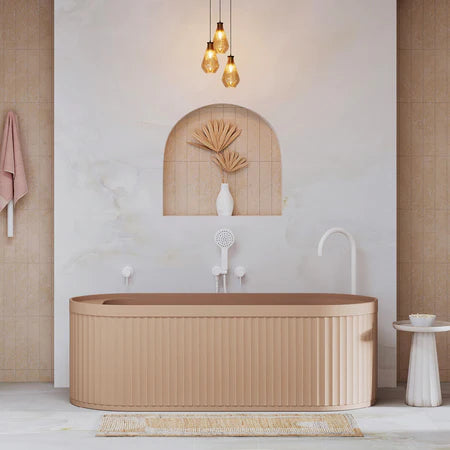


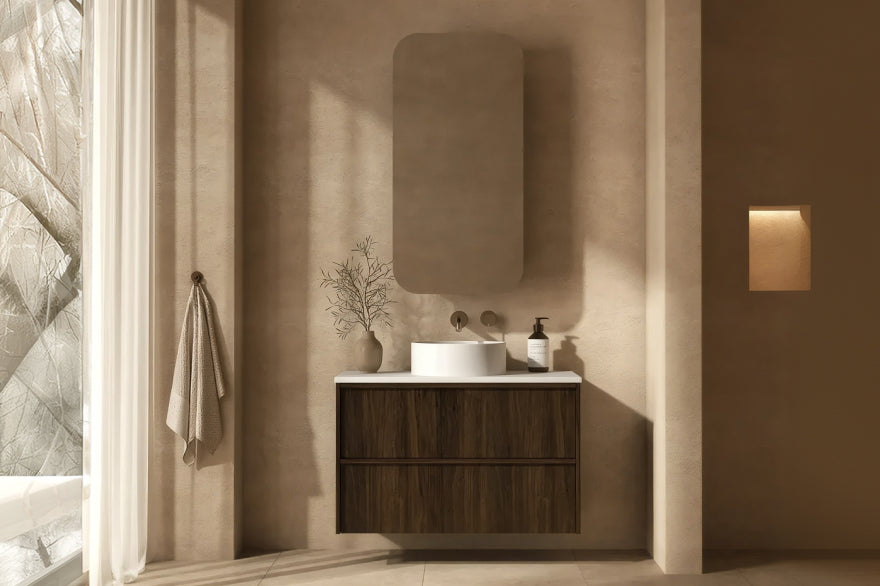
Choosing a bathroom vanity is one of the most consequential decisions in any renovation. It sets the tone for the entire room, determines your storage, affects your daily routine, and, once installed with tiling and plumbing around it, is genuinely difficult to change. Most people spend more time choosing their tiles than their vanity. That is the wrong order.
On Australian renovation forums and in our showrooms, the same questions come up again and again: What size will fit? Wall hung or floor mounted? What happens if the plumbing is in the wrong spot?
This blog answers all of them, drawing on bathroom vanity sizes data, installation realities and practical advice for homeowners buying a bathroom vanity in Australia.
Table of Contents
1. Measure First, Browse Second
The single most important thing you can do before looking at a single vanity is take accurate measurements. A vanity that is too wide blocks the door. Too deep and the toilet feels cramped. Too tall for the household and daily use becomes uncomfortable.
Before you browse, measure and record:
- Available wall width where the vanity will sit.
- Door swing arc. If the door opens into the bathroom, the vanity edge cannot sit within that arc.
- Distance from vanity wall to toilet centre. Australian standards require at least 225mm clearance.
- Plumbing waste exit point. Wall exit suits a wall-hung vanity. Floor exit suits a floor-mounted unit.
- Ceiling height above the vanity wall if you are planning a tall boy or mirror cabinet.
Real-world insight:
"Many homeowners try to cram everything into a limited footprint. Giving each element room to breathe not only improves movement but enhances the overall aesthetic." - Jonathan Scott, Property Brothers (HGTV)
2. Bathroom Vanity Sizes in Australia
Standard bathroom vanity sizes in Australia run 600mm to 1800mm wide, 460mm to 550mm deep and 850mm to 900mm tall for floor-mounted units. Wall-hung units can be adjusted between 800mm and 900mm to suit the height of your household.
| Width | Best For | Notes |
|---|---|---|
| 460 - 600mm | Powder rooms, compact ensuites | Minimum practical size. Wall hung recommended |
| 750mm | Small to medium bathrooms | Good storage without overcrowding the space |
| 900mm | Standard single bathrooms | Most popular size in Australia by a significant margin |
| 1200 - 1500mm | Family bathrooms | One or two users. Generous storage and bench space |
| 1500mm to 1800mm | Master ensuites, luxury bathrooms | Double basin. Requires adequate wall width and door clearance |
Browse Designer Bathware's wall hung and floor mounted vanity range online.
Expert advice available in our Melbourne showrooms or virtually across Australia.
Find More3. Wall Hung vs Floor Mounted: The Plumbing Question
This is the most misunderstood decision in the vanity buying process. Most people choose based on appearance. The right choice is based on plumbing.
Wall Hung Vanity
Bolted to wall studs or a structural backing plate. The floor runs beneath it. Visually lighter, easier to clean around and adjustable to any height during installation. Requires wall-exit plumbing.
Best for: brick or stud wall construction with wall-exit plumbing. Smaller bathrooms. Households who want maximum visual floor space.
Floor Mounted Vanity
Sits on the floor. Suits concrete slab construction where the waste exits through the floor rather than the wall, which is common across a large proportion of Australian homes. Typically more storage due to the full-height cabinet.
Best for: concrete slab homes, floor-exit plumbing, family bathrooms needing maximum storage.
Customer experience:
"I had my heart set on a wall-hung vanity. My builder confirmed the plumbing came through the floor on our concrete slab. The Designer Bathware team helped me find a floor-mounted oak option that looked just as considered. Saved me from a costly replumb." - Verified customer, Designer Bathware
4. Materials and Finishes
Bathroom environments are high moisture, high humidity and heavily used. Material choice matters for longevity, not just looks.
- Polytec and Laminex - the most durable and widely stocked finishes across mid-range Australian brands, used universally across Australian-made cabinetry. Easy to clean, moisture resistant and available in white, grey and matte options.
- Timber and oak veneer - the most requested finish in contemporary Australian bathrooms. Adds warmth and character. Requires properly sealed cabinetry and adequate ventilation to prevent moisture damage over time.
- MDF with PVC coating - practical, affordable and widely available. Suits renovation budgets without sacrificing appearance. Look for quality hinge and drawer mechanisms, as these determine day-to-day performance far more than the door material.
- Stone benchtops - marble, granite and engineered stone add genuine quality and visual weight. Require sealing and some ongoing care. Add high cost but deliver a finish that flat laminate cannot replicate.
Finish tip: match your cabinet hardware, tapware and towel rails before you order the vanity. Brushed nickel tapware against chrome handles is one of the most common and most avoidable mistakes in bathroom renovations.
Still working out how to choose a bathroom vanity that fits your space?
Book a free consult with Designer Bathware. Available in store and virtually.
Get a Free Consultation5. The Best Bathroom Vanity for a Small Bathroom

Compact bathrooms require a different approach. The best bathroom vanity for small bathroom spaces is not the smallest one on the page. It is the one that maximises storage, keeps visual weight low and still leaves the room feeling open.
- Choose a wall-hung vanity. The visible floor space beneath it makes any bathroom feel larger than a floor-mounted unit of the same width.
- A 460mm - 600mm wall-hung vanity suits powder rooms and tight ensuites. It provides enough daily function without dominating a compact wall.
- An undermount or inset basin leaves more usable bench space than an above-counter bowl in a small bathroom.
- Use a mirrored shaving cabinet above instead of a separate mirror and open shelving. More storage, less visual clutter.
- Light finishes (matte white, light oak) read as more open in compact rooms. Confirm you have strong lighting if using a darker finish.
6. The Mistakes Most People Make
Based on real renovation questions and feedback from Australian homeowners, these are the most common vanity buying mistakes:
- Choosing the size before confirming the plumbing exit. A wall-hung vanity on floor-exit plumbing requires a replumb.
- Ordering before measuring the door swing arc. This eliminates far more options than people expect.
- Choosing the cabinet and benchtop finish before locking in tapware and hardware. Mismatched metals are the most common and most visible outcome.
- Underestimating storage. A vanity that looks generous in a showroom can feel tight within a month of daily use in a family bathroom.
- Ignoring soft-close drawer and hinge quality. Cabinet material gets attention. Mechanism quality determines how the vanity actually feels to live with for ten years.
Conclusion
The right vanity is the result of three things done in the right order: measuring before browsing, confirming plumbing before choosing installation type and matching your finish to everything else in the bathroom before committing. Skip any one of those and the decision gets harder and more expensive to undo.
At Designer Bathware, we stock wall-hung vanities, floor-mounted vanities and the basins, tapware and accessories to complete the space. Our team has been helping Australian renovators navigate exactly these decisions since 1973.
If you are still unsure, reach out. This is genuinely what we are here for.