

Have you ever chosen a tap you loved in the showroom, only to find it looked completely wrong once it was installed? It is one of the most common and most avoidable mistakes in bathroom renovation. The issue is rarely the tap itself. It is the combination - the height, the reach, the finish and the way the tapware sits in relation to the basin and vanity beneath it.
In this blog, we cover how to match tapware with basin type, how high the basin tapware can be positioned and how to build vanity and tapware combinations that work as a whole rather than a collection of individual pieces.
Whether you are close to purchasing or still working through your options, this guide will help you make the right call the first time.
Table of Contents
Why Tapware and Basin Compatibility Matter
The basin and the tap work together every single time the bathroom is used. If the spout does not reach the centre of the basin, water hits the rim. If the tap sits too low for an above-counter basin, filling and hand washing become awkward and frustrating. These are functional problems that no amount of good-looking tile work can fix once the renovation is finished and the plumber has left.
According to HIA Australia, bathrooms are the most renovated room in Australian homes, with an average project cost ranging from $15,000 to $35,000. At that level of investment, getting the tapware and basin combination right the first time matters considerably more than most people realise until it is too late to change without high cost.
How to Match Tapware With Your Basin Type
The type of basin you choose determines which tapware options are actually available to you. This is the step most people skip, and it is where most compatibility problems begin. Here is how to match tapware with basin type correctly.
- Above counter basins sit on top of the benchtop. This means standard-height mixers sit too low to be used comfortably. These require either a tall basin mixer or a wall-mounted mixer positioned above the basin rim. Brands like Nero and Meir offer tall basin mixers specifically designed for above-counter installations.
- Undermount & inset basins sit level with or below the benchtop. Standard height hob-mounted mixers work perfectly here. A wall-mounted mixer also suits this configuration well.
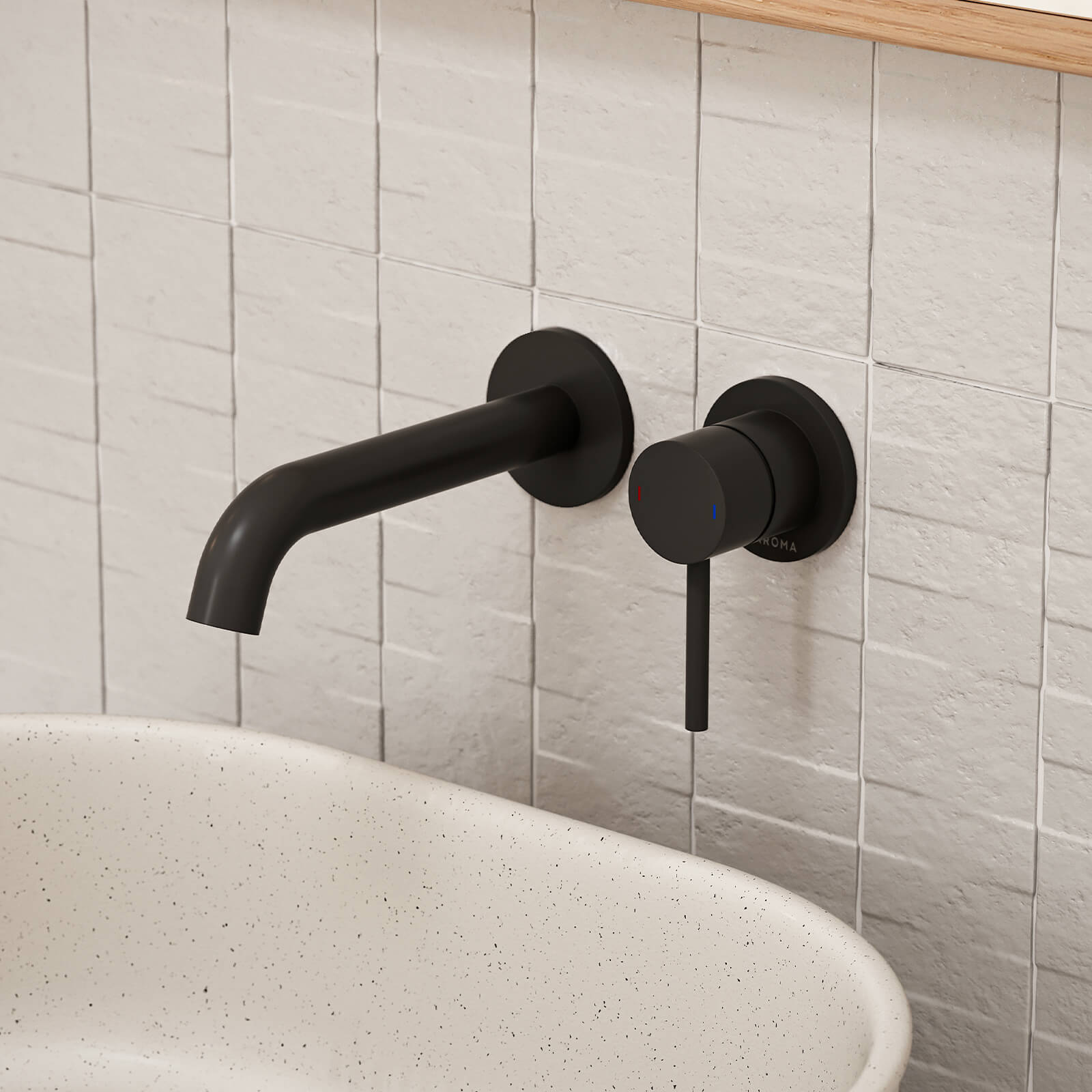
- Wall hung basins - if your sink floats directly on the wall without a vanity bench, you generally need a wall-mounted mixer positioned squarely above the bowl. Just remember that your plumber must rough in all the internal pipework long before the waterproofers and tilers arrive on site.
- Pedestal basins usually use a mixer installed through a pre-drilled tap hole in the basin. Always check the basin hole configuration before selecting tapware. A single-hole basin requires a single-hole mixer.
Find the Right Basin and Tapware Match
Browse Designer Bathware's range of basin mixers and vanity and tapware combinations online.
Shop with Australia-wide deliveryHow High Should Basin Tapware Be?
How high should basin tapware be positioned? This is one of the most searched questions in Australian bathroom design, and the answer depends almost entirely on the basin type you are installing.
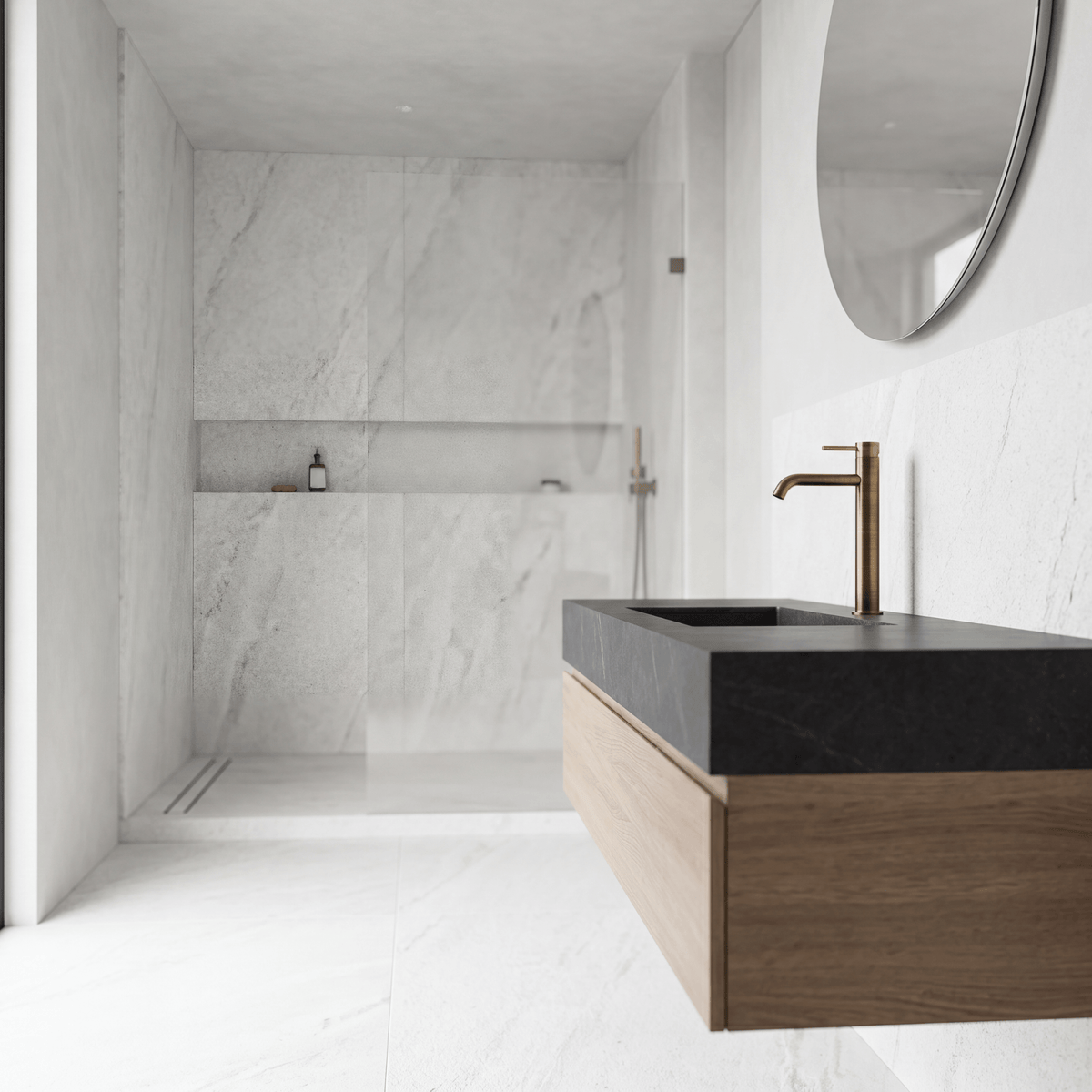
For above counter basins, the tap spout should clear the basin rim by at least 50 - 70mm for comfortable daily use. A tall basin mixer with a spout height of 150mm or more above the benchtop suits most above-counter basins up to 150mm high. Taller basins usually work better with wall-mounted mixers positioned at least 200mm above the basin rim.
Undermount and inset basins installed at a standard Australian vanity height of 850mm to 900mm generally suit mixers between 120mm and 180mm high. The spout should extend comfortably toward the centre of the basin. Deeper benchtops over 500mm require careful attention to spout reach so the basin can be used comfortably without excessive leaning.
"The single most common tapware mistake we see is a customer choosing a tap they love the look of without checking the spout height against their basin depth and benchtop configuration. It is a five-minute check that prevents a very expensive problem." - Designer Bathware team.
Matching Your Finish Across the Vanity
Once you have confirmed the right tapware configuration for your basin, the next step is choosing the finish. This is where successful vanity and tapware combinations either come together naturally or start to feel disconnected. A well-planned bathroom usually keeps the same metallic finish consistent across every fitting, helping the space feel more balanced and considered overall.
For the best result, keep finishes consistent across:
- Basin mixers
- Towel rails
- Robe hooks
- Toilet roll holders
- Shower fittings and accessories
Currently, some of the most popular tapware finishes in Australian bathrooms include:
- Brushed nickel, which suits most colour palettes and helps minimise fingerprints
- Brushed brass, commonly used in contemporary and traditional-inspired bathrooms
- Antique brass, which works beautifully in warm, natural and heritage-style spaces
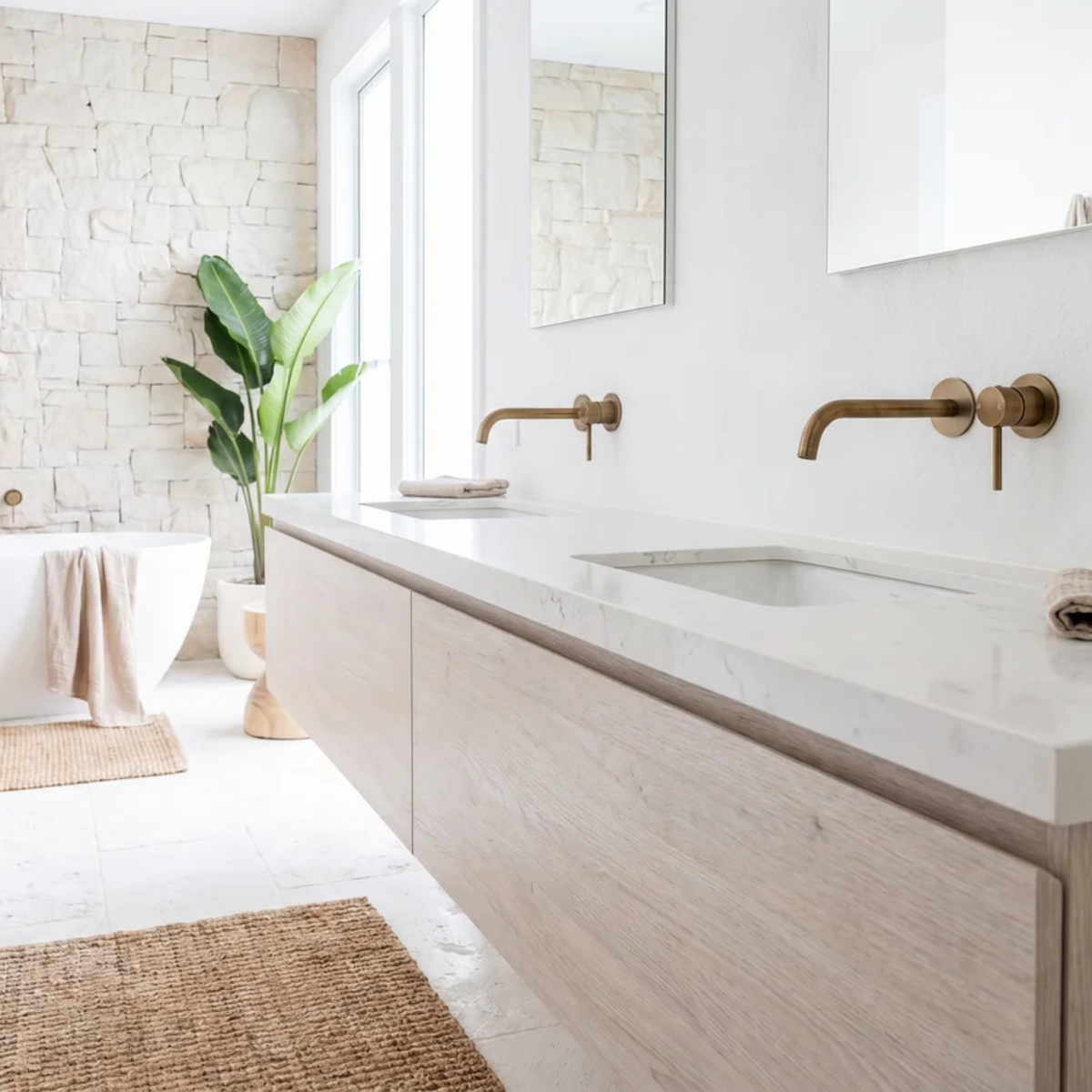
Antique brass also pairs particularly well with timber vanity cabinetry, natural stone surfaces and textured finishes. This makes it a strong option for more design-led bathrooms.
Common Mistakes to Avoid
Even experienced renovators make tapware and basin compatibility errors. These are the ones that come up most frequently:
- Choosing a tap based on appearance alone, without checking the spout height or reach against the actual basin dimensions
- Ordering a wall-mounted mixer after the wall is tiled, when the rough-in plumbing has not been prepared for a wall-mounted installation
- Mixing metallic finishes across the vanity without a clear design intention - it rarely works the way people hope
- Selecting a mixer without checking the number of pre-drilled holes in the basin - a three-hole basin requires a different configuration than a single-hole basin
- Not confirming the spout reach against the depth of a deeper-than-standard benchtop, which can leave the water hitting the front of the basin rather than the centre
Final Thoughts
Matching tapware to your basin and vanity is not complicated once you know what to look for. Confirm your basin type first, then check spout height and reach, then choose a finish that works consistently across the entire bathroom. Getting these three things right before you purchase removes the most common and most expensive compatibility problems from the renovation process.
The decisions made at this stage affect how the bathroom functions and feels every single day. A tap that is the wrong height is frustrating to live with. A finish that does not match is immediately noticeable to everyone who uses the space. Both are completely avoidable with a little preparation and the right advice before you buy.
What basin type are you working with? That single decision narrows down the compatible tapware options significantly, and it is the best place to start if you are still working through your choices.
Need help with how to match tapware with the basin and vanity?
Designer Bathware's team offers free consultations. Book yours today.
Book Now