
Choosing a bath is one of the most important decisions in any bathroom renovation. Get it right, and you have a centrepiece that adds daily comfort and long-term value to your home. Get it wrong, and you are dealing with a bath that does not fit, does not suit your lifestyle or costs far more to install than you expected.
According to industry insights, approximately 35% of bathtub returns in Australia are due to size issues and a further 20% from type mismatches - customers choosing baths that do not suit their bathroom layout or household needs. This bath buying guide helps you avoid both mistakes before you commit.
Key Takeaways
- Standard bath length in Australia ranges from 1500 mm to 1700 mm
- Freestanding baths need 150 mm to 300 mm clearance on all sides
- Bath type determines installation complexity and cost as much as the bath price itself
- Measure your bathroom before you browse, not after you fall in love with a bath
Table of Contents
1. What Type of Bath Suits Your Bathroom

Bath type is the first decision to make, and the one most buyers leave until last. Here is a quick overview of the main options available for Australian homes:
Freestanding Baths
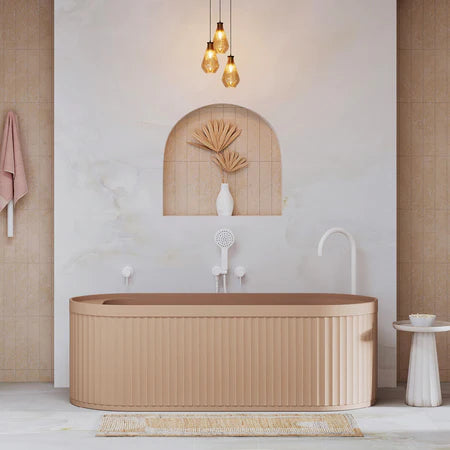
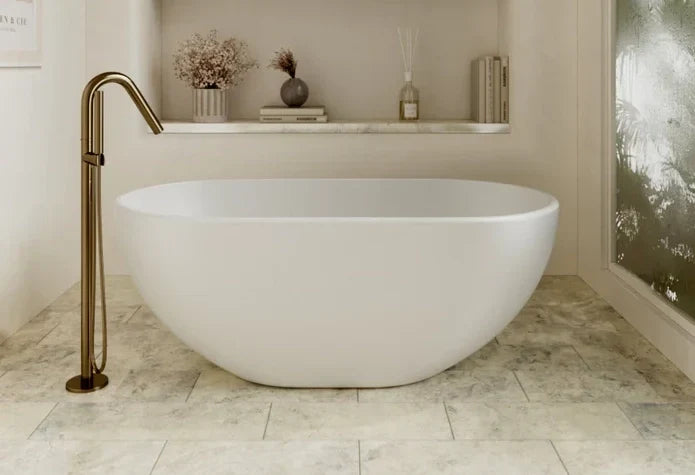
The most visually striking option. A freestanding bath sits away from the wall and works as a design feature in its own right. It suits medium to large bathrooms and requires clear space on all sides for access and cleaning.
Built-In and Alcove Baths
The most common bath type in Australian homes. Three walls surround the bath, making it easy to install a shower over the top. It suits small to medium bathrooms and offers the most practical use of space.
Back-to-Wall Baths
One flat side sits flush against the wall, with the remaining sides exposed. Back to wall bath gives a cleaner, more contemporary look than a built-in bath without the full space requirement of a freestanding model.
Corner Baths
Designed for larger bathrooms, corner baths are tucked into the corner with a tapered or square profile. They offer a generous bathing area and, in some layouts, are the practical choice where space is limited and the corner position makes the best use of available floor area.
Shower Baths
A practical combination for bathrooms that need to serve both functions. The shower bath has a wider end to allow comfortable showering over the bath. It suits family bathrooms where space is limited.
Bath Type Comparison
| Type | Best For | Space Required | Price Range |
|---|---|---|---|
| Freestanding | Feature bathrooms, large ensuites | Medium to large | $878 to $7,182 |
| Built-in / Alcove | Everyday family bathrooms | Small to medium | From $312 |
| Back-to-Wall | Contemporary bathrooms | Medium | $938 to $2,085 |
| Corner | Luxury large bathrooms | Medium | $958 to $2,085 |
| Shower Bath | Family bathrooms, dual purpose | Small to medium | From $400 |
Note: Prices are indicative only and may vary by retailer, material and installation requirements. Always confirm current pricing directly with your supplier.
Browse Designer Bathware's full range of freestanding, built-in and back-to-wall baths to find the right style for your renovation.
2. Standard Bath Sizes in Australia Explained

The standard bath size for residential bathrooms in Australia is 1500 mm x 750 mm or 1675 mm x 750 mm. These dimensions align with standard plumbing rough-in positions, which are set during construction and cannot easily be moved without significant cost.
Here is a quick reference for common bath sizes by type:
- Built-in and alcove baths - 1500 mm to 1700 mm long, 700 mm to 750 mm wide
- Freestanding baths - 1400 mm to 1800 mm long, 700 mm to 850 mm wide
- Corner baths - 1200 mm to 1700 mm on each side
- Compact baths - 1200 mm to 1400 mm long, suited to small bathrooms and children's bathrooms
If you are choosing a freestanding bath, allow at least 150 mm to 300 mm of clearance around all sides to allow for comfortable access and cleaning. This clearance requirement is one of the most commonly overlooked measurements in bathroom planning.
"The single biggest mistake we see is buyers measuring the wall space and assuming the bath will fit," says a senior consultant at Designer Bathware.
You need to account for clearances, door swings and your vanity position before you settle on a size. That conversation at the start saves a very stressful conversation later.
3. Bath Depth and Comfort
Bath depth is what determines how enjoyable the soaking experience actually is, and it varies significantly between bath types.
The standard alcove bathtub in Australia is typically 400 mm to 500 mm deep, with a capacity of around 150 to 180 litres when filled to a comfortable bathing level. Freestanding baths are generally deeper, with soaking depths of 450 mm to 600 mm depending on the model.
Key considerations for bath depth:
- Deeper baths offer a better soaking experience, but use significantly more water
- If you have young children using the bath, a shallower built-in bath is safer and more practical
- Stone resin and acrylic baths retain heat differently — stone resin stays warmer for longer but is heavier and more expensive
- Check the internal basin length, not just the external measurement, to confirm legroom comfort
Not sure which bath depth suits your bathroom layout?
Our team at Designer Bathware can help you compare options before you buy.
Get Expert Advice4. Cost of Baths in Australia
Understanding the full cost of buying baths means looking beyond the sticker price. Installation, waterproofing and plumbing adjustments can add significantly to the total.
Here is a realistic cost breakdown:
| Cost Item | Estimated Range |
|---|---|
| Built-in acrylic bath | $312 to $1,500 |
| Back-to-wall bath | $938 to $2,085 |
| Freestanding bath | $878 to $7,182 |
| Plumbing installation | $300 to $800 |
| Waterproofing (if required) | $400 to $1,200 |
| Tiling and finishing | Varies by bathroom size |
Note: Bath and installation costs can vary significantly depending on the bath type, material, installation complexity, plumbing modifications and regional labour rates. Always obtain quotes from qualified trades before finalising your renovation budget.
5. Common Mistakes to Avoid When Buying Bath
- Buying before measuring. Always confirm your bathroom dimensions, door clearance and plumbing rough-in position before browsing.
- Choosing style over practicality. A beautiful freestanding bath in a small bathroom will feel cramped and be difficult to clean.
- Ignoring weight limits. Stone resin and cast iron baths are significantly heavier than acrylic. Confirm your floor can support the weight before purchasing.
- Forgetting about the shower. If you plan to shower over the bath, a shower bath or alcove bath with a flat rim is the right choice. Not all baths accommodate a shower screen easily.
- Overlooking water efficiency. Larger baths use more water with every fill. Check the capacity and consider whether that suits your household's usage patterns.
Conclusion
Choosing the right bath comes down to four things: the type that suits your bathroom layout, the size that fits your space, the depth that matches your lifestyle and the budget that covers the full installation cost, not just the bath itself.
At Designer Bathware, our range covers every bath type from compact built-in baths for smaller bathrooms to statement freestanding baths and stone resin baths for those looking for something special. Our team is available to help you compare options - check dimensions and find the right bath for your renovation before you commit.
Have a question about which bath suits your space? Leave a comment or reach out to our team directly.