

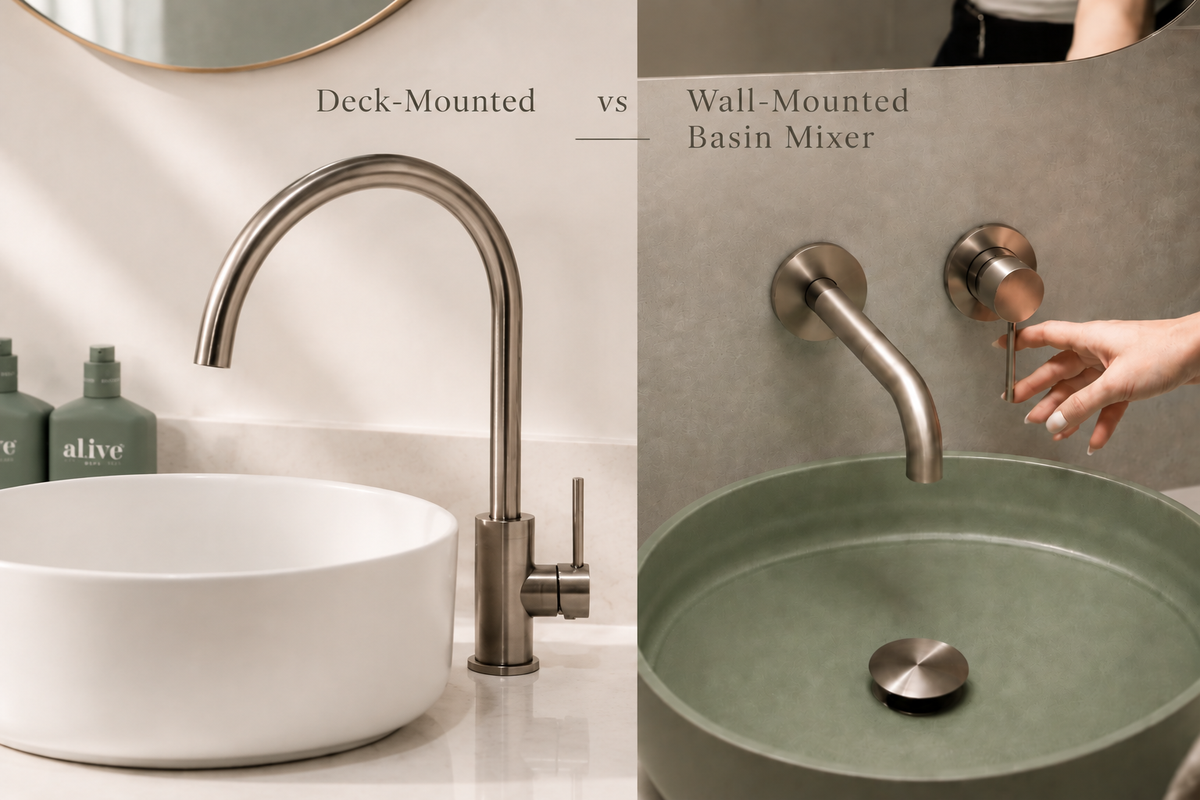
The basin mixer is one of the most-handled fixtures in a bathroom. People touch it a dozen times a day, and it sits directly in the eyeline above the vanity. Getting the mounting type wrong - deck vs wall - is not just an aesthetic problem. It affects your bench space, your plumbing rough-in, your stone cutting, and potentially your renovation budget if it needs to be changed later.
This blog breaks down both options clearly, with practical guidance for Australian renovators, above-counter basin buyers, and trades professionals who need to get the decision right early in the build process.
Table of Contents
What Is a Deck-Mounted Basin Mixer?

A deck-mounted basin mixer installs directly onto the benchtop or basin, with the spout and handles rising from the surface. Water supply lines run beneath the bench to the tap.
Key characteristics:
- Requires a pre-drilled tap hole in the basin or stone benchtop
- Standard tap hole diameter is 35mm in Australia
- Straightforward installation, no wall plumbing relocation needed
- Works with most basin types, including inset, undermount, and some above-counter options
- Wide range of styles and price points available
"Deck-mounted mixers remain popular because they work with almost every basin style and are generally easier to install during renovations." - Designer Bathware, in-store consultant.
What Is a Wall-Mounted Basin Mixer?

A wall-mounted basin mixer is fixed to the wall behind the basin, with the spout extending out over the bowl. Supply lines are rerouted inside the wall during the rough-in phase.
Key characteristics:
- No tap hole required in the benchtop or basin
- Water supply lines are concealed inside the wall
- Bench space beneath the mixer is completely clear, easier to clean
- Must be planned before wall tiling begins
- Suits above-counter basins particularly well
From our team:
"The most common mistake we see with wall-mounted mixers is buyers deciding after the tiler has started. The rough-in position needs to be locked in during framing, and that's a conversation that should happen at our showroom before anyone picks up a drill."
Side-by-Side Comparison
| Deck-Mounted | Wall-Mounted | |
|---|---|---|
| Installation timing | Anytime | Must be planned before tiling |
| Tap hole needed | Yes (35mm standard) | No |
| Bench space used | Yes | No |
| Cleaning ease | Moderate | Easy |
| Plumbing complexity | Low | Medium |
| Best basin type | Inset, undermount, semi-recessed | Above-counter, wall-hung |
| Stone cutting required | Yes (if no pre-drilled hole) | No |
| Range availability | Wide | Wide |
Which Works Best with Your Basin Type?
1. Above-Counter Basins
Wall-mounted tapware is the stronger pairing. The basin sits raised on the benchtop, and a wall-mounted spout delivers water cleanly into the bowl without drilling through the stone.
2. Undermount and Inset Basins
Deck-mounted is the standard choice. The tap hole sits naturally in the benchtop, and the mixer integrates with the bench surface.
3. Semi-Recessed Basins
Either can work depending on the specific model. Check whether the basin includes a tap hole before deciding.
Find the Right Basin Mixer for Your Vanity
Compare wall-mounted and deck-mounted basin mixers from Australia's leading tapware brands and find the ideal solution for your basin and vanity design.
Browse Basin MixersRough-In Height and Planning
Wall-mounted basin mixers in Australia are typically roughed in between 900mm and 1000mm above finished floor level, though this varies depending on the basin height and spout length.
Planning checklist before your tiler arrives:
- Confirm your basin height and above-counter bowl depth
- Specify the mixer model and check the manufacturer's recommended rough-in height
- Allow for the wall tile thickness in your measurements
- Ensure the spout reach will clear the rim and deliver water into the centre of the bowl
Getting this wrong is expensive to fix. It means cutting into tiled walls, re-waterproofing, and retiling, a cost that easily runs into the thousands.
Can You Switch After Tiling?
Switching from deck-mounted to wall-mounted after tiling is technically possible but not straightforward. It involves:
- Cutting into finished tiled walls
- Re-routing supply lines
- Repairing and re-tiling the affected area
- Re-waterproofing if the wall is a wet area rated
According to a 2024 Budget Direct survey of over 1,000 Australian homeowners, unexpected costs were the number one barrier faced during renovations - cited by nearly three-quarters of respondents. Switching tapware mounting types after tiling is one of the fastest ways to land in that category.
If you are currently in the planning stage, this is the right time to make the call.
Unsure which mixer suits your vanity setup?
Speak with our team for a free consultation. We can help you compare installation requirements, basin compatibility, vanity layouts and finish options before you buy.
Get a Free ConsultationCost Considerations
Wall-mounted tapware is not always more expensive to buy. The installation cost is where the difference appears, particularly if supply line rerouting is needed in an existing bathroom.
| Factor | Deck-Mounted | Wall-Mounted |
|---|---|---|
| Mixer price range | From entry-level upward | Generally similar, some premium models |
| Installation cost | Low, standard plumbing | Higher, rough-in and concealment |
| Stone drilling cost | Yes, if no pre-drilled hole | Not applicable |
| Retrofit cost if changed later | Low | High |
Which Should You Choose?
Choose deck-mounted if you are working with an inset or undermount basin, if wall rough-ins are already set, or if you want the widest product selection.
Choose wall-mounted if you have an above-counter basin, if you value bench space and easy cleaning, or if you are building from scratch and can plan the rough-in correctly from the start.
Conclusion
Both mounting types are sound choices when they are matched to the right basin, vanity, and build stage. The decision that causes problems is one made too late.
At Designer Bathware, we stock both deck-mounted and wall-mounted basin mixers across every major tapware finish: matte black, brushed nickel, gunmetal, antique brass, and chrome - from brands including Meir, Nero, Phoenix, and Fienza. Our team helps homeowners, designers and trades compare basin mixer mounting types every day.
Explore our digital boutique today for secure nationwide delivery, or visit our local showrooms to receive expert consultation for your next project.